Panda Works Club
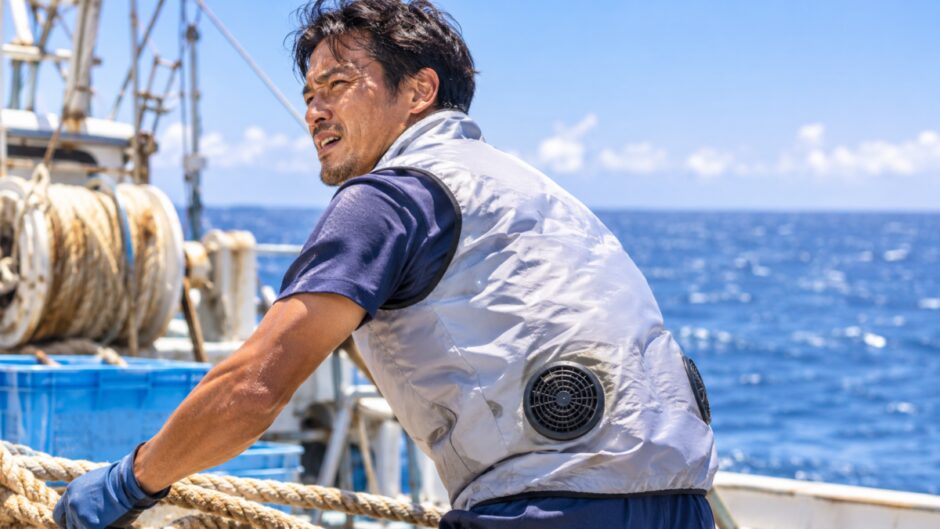

A fan cooling vest helps most when you’re stuck in the sun with little wind: anchored, trolling slowly, on a pier, or on the bank. On a fast boat, the wind is already doing part of the job for you.
This guide is for fishermen who work on deck and for anglers who fish through the hot months. It covers what a fan vest actually does, what to check before buying one for fishing, how the needs of working crews and anglers differ, and five popular models compared on their listed specs.
This is a spec-based roundup: none of the vests below has been used by the author. No fishing-specific heat statistic is cited either: the U.S. Bureau of Labor Statistics groups fishing together with agriculture, forestry, and hunting, so a clean fishing-only heat count doesn’t exist in the sources used here.
Where Fan Cooling Vests Come From: A Japanese Invention
This entire product category has a specific origin, not a vague “ancient technique” story. In the 1990s, Hiroshi Ichigaya, a former Sony engineer, tried circulating water through a prototype garment to cool himself on a hot business trip; the tank kept leaking. He switched approaches: small fans that pull in outside air and speed up the evaporation of sweat. He patented the design and brought it to market in 2004 under the name kuchofuku (空調服), literally “air-conditioned clothing.”
The mechanism is the same one doing the work in every vest compared in this guide: fans near the waist draw in ambient air, and evaporating sweat does the cooling. It isn’t a refrigerant, and the vest itself isn’t lowering the air temperature.
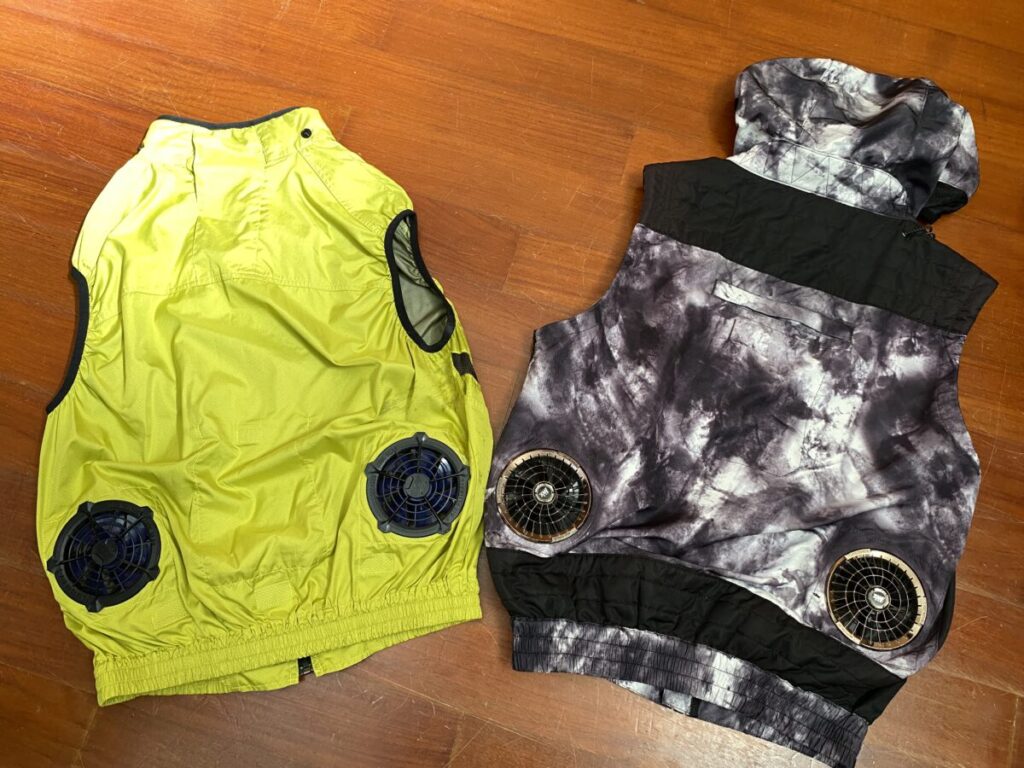
The category didn’t stay a niche product. A 2011 AFP report, amid a nationwide push to cut power use after the Fukushima disaster, put the number of Japanese companies issuing Kuchofuku’s gear to staff at nearly 1,000, including automakers, steelmakers, food manufacturers, and construction firms. It’s kept growing since: Japanese trade press (Sen-i News) estimated the domestic electric-fan-workwear market at roughly ¥20 billion in 2024, with newer entrants like Burtle now reported to hold close to half of shipment value, alongside the original Kuchofuku brand and Sun-S’s competing “kuchofuku-fujinfuku” line.
None of the vests compared below are official Kuchofuku products. They’re independent brands sold on Amazon, but they’re built on the same fan-and-evaporation design this Japanese invention started.
Sources: Government of Japan, “Cooling the Body with Fan-Equipped Clothes”; Web Japan, “Air-Conditioned Clothes”; AFP, “Air-conditioned clothes help Japan beat heat” (2011); Sen-i News market reporting (2024–2025).
How a Fan Cooling Vest Works on the Water
Most fan vests pull outside air in through small fans and push it across your torso, which speeds up the evaporation of sweat. In most designs the fan only moves air; nothing chills it. Some models add a semiconductor (Peltier) plate that cools part of the airflow directly.
Two things follow from that:
- It needs sweat to work. Evaporation slows as humidity rises, and one manikin study found the lowest cooling capacity in hot, humid air. A small human trial still found a benefit at 85% humidity (see “What the Data Says” below), so the evidence is mixed.
- Wind competes with it. At speed on an open boat, moving air is already cooling you. A vest earns its keep when you’re stopped, in direct sun, or working hard.
That second point is reasoning from how evaporative cooling works, not a test result. It’s the main reason to check your actual use case before spending money.
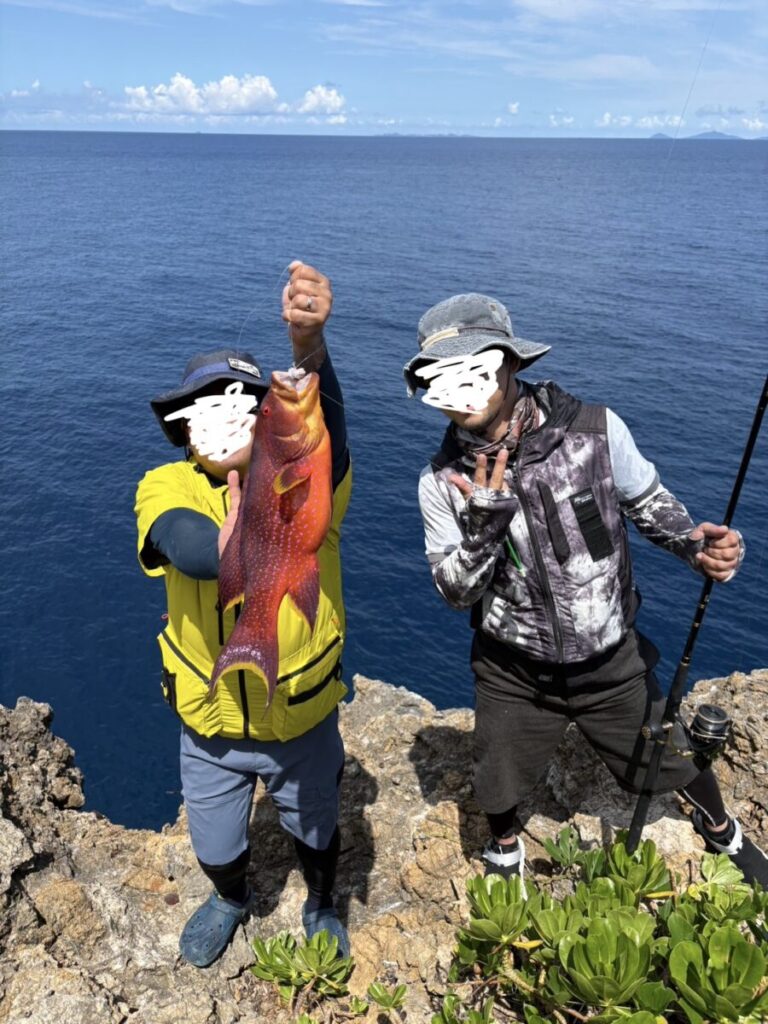
What the Data Says
Fishing sits inside a broader government category, and the one fan-jacket experiment that tested humid air is small. Both charts below carry those limits.
Methods: nine healthy men, 60 min at 4 METs in a nearly windless chamber; both rooms about 29°C WBGT. Source: Mori et al., J Occup Health 2022;64:e12323 (n = 9, long-sleeve fan jacket at 12 L/s).
What to Check Before Buying for Fishing
1. Splash, Rain and Salt
Fans and batteries are electronics. None of the listings checked for this article document waterproofing, so assume splash resistance is limited. Keep the battery in a closed pocket or a dry pouch, and remove the fans before washing, as the listings instruct.
2. Where You Fish
Still air (shore, pier, anchored) suits higher airflow. Fast open water gives the vest less to do, since wind is already doing part of the job.
3. Life Jacket Fit
Fans need an air path, usually at the waist. Check how the vest sits with your life jacket, and never loosen or leave off the jacket for comfort. Whether a given vest keeps its airflow under a life jacket is something the listing won’t tell you, so look for owner photos or ask the seller.
4. Sun Cover
A hooded or long-sleeve jacket covers more skin than a sleeveless vest, but it runs warmer once the fans are off.
5. Casting Freedom
Sleeveless vests leave your arms free for casting and reeling. Jackets with fans in the lower back can ride up when you cast.
6. Battery Handling
Most models run from a power bank. Higher capacity means longer runtime but more weight in a back pocket, and a battery that goes overboard is gone, so a floating pouch is cheap insurance.
7. Visibility
A bright color helps at dawn, dusk, and around boat traffic. “Reflective-colored” is not the same as certified, so look for an actual safety standard on the listing if that matters to you.
Working Fishermen and Anglers Need Different Things
| Working Fishermen | Anglers | |
|---|---|---|
| Typical day | Long shifts, moving gear, wet deck | Hours in the sun, often still or slow |
| Clothing over the vest | Foul-weather gear or bibs that trap heat and block airflow | Light shirt, sometimes a life jacket |
| Main risk to the vest | Constant water, salt, and abrasion | Occasional spray |
| What to prioritize | Durability, fit under outer layers, easy cleaning | Airflow, sleeve and hood choice, casting freedom |
| Biggest unknown | Whether airflow survives under oilskins | Performance in humid air |
If you work on deck, treat any fan vest as comfort gear that sits beside your required safety equipment, not in place of it.
5 Fan Cooling Vests for Fishing (2026)
Specs below are as listed by sellers or reported in third-party roundups, and none was tested by the author. Check each live listing for current specs, sizing, and battery contents.
1. MIDIAN 30V Cooling Jacket — Strongest Airflow for Still-Air Days
Good for: anchored, trolling slowly, pier or bank fishing with no wind to help you
A high-voltage fan jacket at 30V with a 20,000mAh battery, the strongest airflow of the five, aimed at days with little wind of its own to rely on.
2. Lvkakmox 21V Cooling Fan Vest — Larger Torso Coverage
Good for: long days in the sun where you want more of your torso covered
A two-fan vest at 21V with a 20,000mAh battery. The two-fan layout gives larger torso coverage than a single-fan design, useful across a long day on the water. Also sold in a reflective “Safety” trim.
3. LABEWVI 30V Cooling Vest — Check Battery and Fan Placement
Good for: anglers comparing high-voltage vests on fan position before buying
A high-voltage fan vest at 30V. The listing is lighter on battery-capacity detail than the others here, so confirm battery size and fan placement on the current product page before ordering.
4. LABEWVI Semiconductor Peltier Vest — Targeted Back Cooling
Good for: anglers who want a cooling plate rather than fan noise or airflow
A semiconductor (Peltier) vest with a 20,000mAh battery, claiming cooling up to -24°C at the plate itself. That’s a lab figure for the cooling plate, not a promise the air around you drops 24 degrees. Targeted back cooling means more electronics hardware sitting close to spray and salt, so treat splash protection as a priority with this one.
5. Foiueyga 4-Fan Cooling Vest — Budget Multi-Zone Option
Good for: trying the category out, or outfitting more than one angler affordably
A four-fan vest at 7.4V with the fans removable for washing, the most budget-friendly of the five, with four smaller zones instead of one or two larger fans.
| Vest | Type | Listed Spec | Best For |
|---|---|---|---|
| MIDIAN 30V Jacket | Fan jacket, high voltage | 30V, 20,000mAh battery | Still-air, no-wind days |
| Lvkakmox 21V Vest | Two-fan vest | 21V, 20,000mAh battery | Larger torso coverage |
| LABEWVI 30V Vest | Fan vest, high voltage | 30V | Confirm battery/fan placement |
| LABEWVI Peltier Vest | Peltier + fan | Up to -24°C claimed, 20,000mAh | Targeted back cooling |
| Foiueyga 4-Fan Vest | Four-fan vest | 7.4V, removable fans | Budget / multi-angler |
How to Pick
- Fishing in still, hot air → the higher-voltage fan vests
- Fishing in humid air → keep expectations modest for any fan vest, and consider a lighter option you can also wear without the fans
- Wearing it under foul-weather gear → the vest has to fit under the outer layer with the fans clear, so check the profile first
Questions Fishermen and Anglers Ask When a Fan Vest Feels Weak
It barely cools me on a humid day. Is it broken?
Probably not. Humid air can limit evaporation, though one lab trial still found a benefit at 85% humidity. Try a higher fan speed and a looser fit around the neck so air can escape.
Why do I feel nothing while the boat is moving?
Wind is already moving air over you. Turn the fans on when you stop, or when you’re working in the sun.
Does a layer over the vest matter?
Yes. Foul-weather gear, a tight life jacket, or a thick shirt can block the intake or the exit path. Test the vest with the same layers you’ll actually wear.
Can I use it in the rain or spray?
Treat it as splash-limited unless the listing states a water rating. Keep the battery dry and let the fans dry before storing.
How long will the battery last?
It depends on capacity and fan speed. A 20,000mAh power bank, the size listed for several of these vests, gives longer runtime on low than on high, and the listing’s own runtime figure is the one to trust.
Can it replace shade, water, and breaks?
No. A fan vest is one tool next to shade, drinking water, and rest, and it doesn’t replace any of them.
Specs above are manufacturer-stated figures as of publication. Check each product page for current pricing, specifications, and availability before buying.
More Heat Safety Guides
This site covers cooling vests for a range of outdoor jobs, each with its own buying considerations:
- Cooling Vests for the Job Site (Construction)
- Cooling Vests for Farm & Landscaping Work
- Cooling Vests for Traffic Control & Security
- Cooling Vests for Delivery Drivers & Motorcycle Couriers
- Cooling Vests for Sanitation & Outdoor Cleaning Crews
- Cooling Vests for Forestry & Logging Work