Panda Works Club
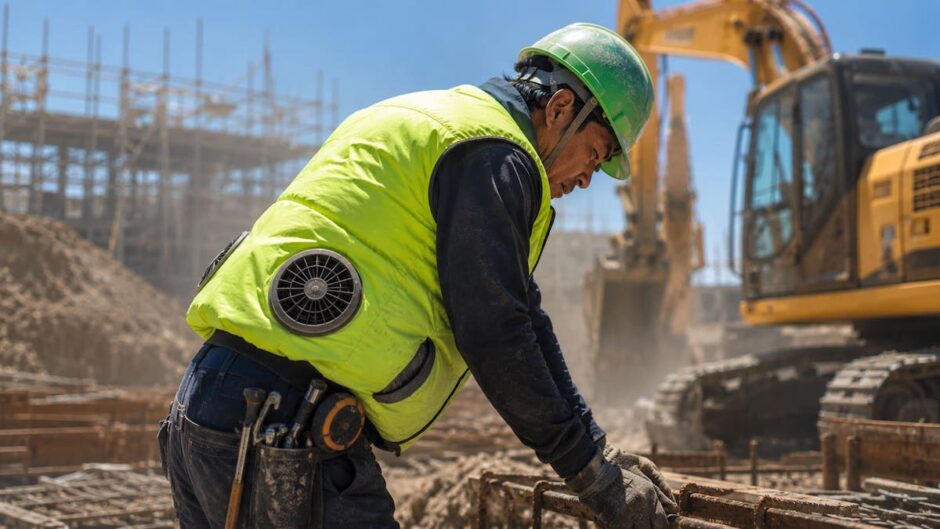

Summer 2026 was the hottest on record in the United States, and Western Europe just logged its warmest June–July stretch ever measured: France, Germany, and Denmark all broke their all-time temperature records, and a reading of 119.1°F (48.4°C) was recorded in Sardinia, Italy. For anyone working outdoors, or in a warehouse, kitchen, or shop with no real climate control, that’s not a headline, it’s a daily reality.
There’s still no single federal heat standard in the US: OSHA’s proposed rule has been in rulemaking since 2024, with a supplemental proposal targeted for later this year and final action not expected until 2027. But seven states (California, Colorado, Maryland, Minnesota, Nevada, Oregon, and Washington) already enforce their own heat illness prevention standards, and OSHA renewed its Heat National Emphasis Program through 2031, meaning heat-related inspections are already a real enforcement priority regardless of where the federal rule ends up. Treating heat gear as optional is getting harder to justify, on paper or in practice.
Open Amazon and you’ll see cooling vests marketed with numbers like “30V,” “massive airflow,” and “-24°C cooling,” numbers that are hard to compare without knowing what they actually mean. This guide covers what actually matters when choosing a cooling vest for job-site or workplace use, and five options available on Amazon right now.
Where Fan Cooling Vests Come From: A Japanese Invention
This entire product category has a specific origin, not a vague “ancient technique” story. In the 1990s, Hiroshi Ichigaya, a former Sony engineer, tried circulating water through a prototype garment to cool himself on a hot business trip; the tank kept leaking. He switched approaches: small fans that pull in outside air and speed up the evaporation of sweat. He patented the design and brought it to market in 2004 under the name kuchofuku (空調服), literally “air-conditioned clothing.”
The mechanism is the same one doing the work in every vest compared in this guide: fans near the waist draw in ambient air, and evaporating sweat does the cooling. It isn’t a refrigerant, and the vest itself isn’t lowering the air temperature.
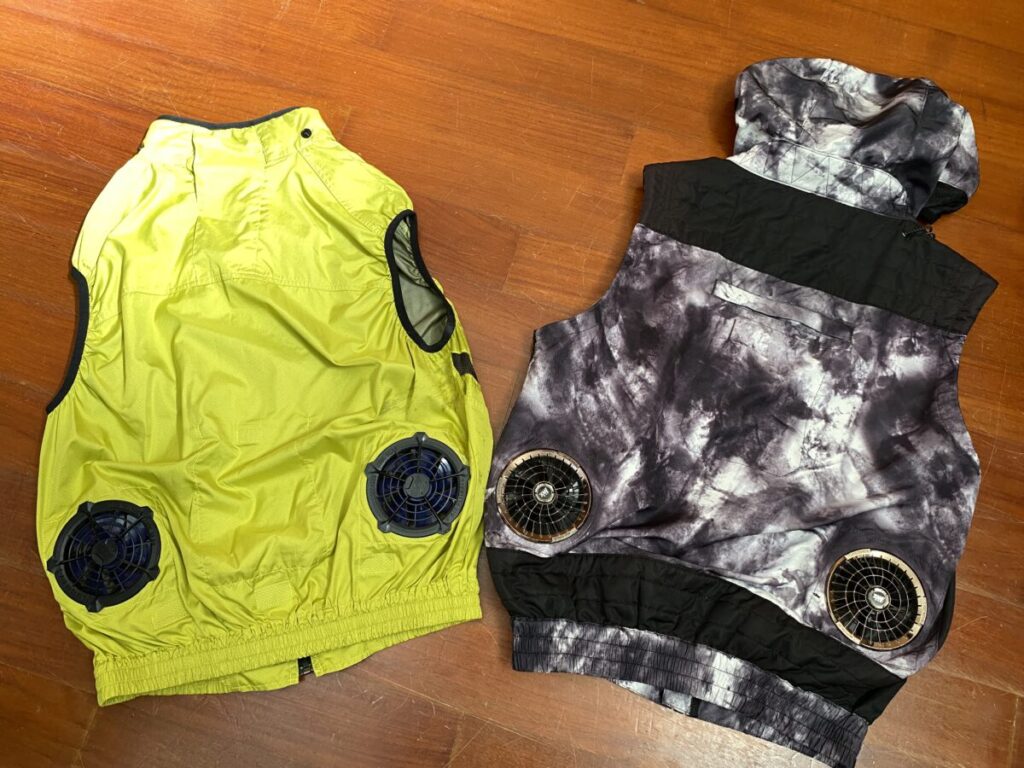
The category didn’t stay a niche product. A 2011 AFP report, amid a nationwide push to cut power use after the Fukushima disaster, put the number of Japanese companies issuing Kuchofuku’s gear to staff at nearly 1,000, including automakers, steelmakers, food manufacturers, and construction firms. It’s kept growing since: Japanese trade press (Sen-i News) estimated the domestic electric-fan-workwear market at roughly ¥20 billion in 2024, with newer entrants like Burtle now reported to hold close to half of shipment value, alongside the original Kuchofuku brand and Sun-S’s competing “kuchofuku-fujinfuku” line.
None of the vests compared below are official Kuchofuku products. They’re independent brands sold on Amazon, but they’re built on the same fan-and-evaporation design this Japanese invention started.
Sources: Government of Japan, “Cooling the Body with Fan-Equipped Clothes”; Web Japan, “Air-Conditioned Clothes”; AFP, “Air-conditioned clothes help Japan beat heat” (2011); Sen-i News market reporting (2024–2025).
Why Heat Gear Isn’t Optional Anymore
Even without a finalized OSHA standard, the direction of travel is clear. State rules already in force typically require some combination of a written heat illness prevention plan, scheduled water and shade breaks, and acclimatization periods for new workers once temperatures or the heat index cross a set threshold (Oregon’s trigger is as low as 80°F heat index). OSHA’s own Heat NEP, renewed in April 2026 through 2031, directs inspectors to prioritize heat-related hazards across a growing list of high-risk industries, construction and warehousing included.
None of that specifically mandates fan-cooled or Peltier vests by name. But as a practical, wearable way to reduce heat strain during a shift, they’re one of the more realistic tools available. After the summer just recorded, treating personal cooling gear as a nice-to-have rather than part of a real heat safety plan is a harder position to defend.
5 Things to Check Before Buying a Cooling Vest
1. Voltage Isn’t the Whole Story
Listings lean hard on voltage as the headline spec (21V, 30V, sometimes higher) because it’s an easy number to put in bold. It’s not meaningless: more voltage generally lets the fans spin faster. But on an actual job site, a vest gets worn under a hi-vis layer, a tool belt, or a harness, and any of those can pinch the cuffs or hem shut. Once that happens, a 30V vest moves air no better than a 15V one. Before comparing voltage numbers, picture how the vest will actually sit under whatever else you’re wearing that day.
2. Battery Life Depends on the Fan Speed You’ll Actually Use
The runtime printed on the listing is almost always the lowest-speed number, because that’s the one that looks best. On a slab in July you’re not running the lowest speed. You’re on medium or high, where real runtime often lands at a third of what’s advertised. A full 8-to-10-hour shift with no outlet nearby means either a 20,000mAh-plus battery or a charged spare in your bag; treat the spare as part of the kit, not an optional extra.
3. Compatibility With a Harness or Other PPE
If your work involves a fall-protection harness, tool belt, or other gear worn over or around the torso, check specifically whether the vest is designed to work with it before buying. Straps running across the fan intake or the back air channel can cut cooling efficiency significantly. None of the models below are marketed specifically as harness-compatible, so if that’s a requirement for your crew, confirm it directly with the manufacturer or look for a model that states it explicitly.
4. Build Quality and Warranty
You’re wearing a sizeable lithium-ion battery pack for hours at a time, so basic quality signals are worth checking: a stated warranty period, clear charging specifications, and a listing that’s specific about what’s included. Very low-cost listings sometimes skip the warranty information entirely, and that absence is itself useful information.
5. Reading Past the Marketing Numbers
“Cooling down to -24°C” sounds like the vest is going to drop the air around you by 24 degrees. It isn’t: that’s almost always a measurement of the cooling plate’s own temperature differential under lab conditions, not what you’ll feel standing on hot asphalt. The claim usually isn’t false, exactly; it’s just not telling you what it sounds like it’s telling you. A listing that explains its test conditions is a better sign than one that just states the number and moves on.
Everything below comes straight from each manufacturer’s own listing. Confirm current pricing and specs on the product page before you buy.
5 Cooling Vests for the Job Site (2026)
1. MIDIAN 30V Cooling Jacket — Best for Full Sun Coverage
Good for: roofing, exterior work, anyone in direct sun all day
A long-sleeve jacket in 100% cotton rated to block over 98% of UV rays, with an open-back “3D wind duct” design and a 20,000mAh battery across five speeds, rated up to roughly 10 hours at a moderate setting. The long sleeves add real sun and scrape protection that a sleeveless vest doesn’t.
2. Lvkakmox 21V Cooling Fan Vest — Best Lightweight Layer
Good for: layering under other gear, warm-weather crews who need mobility
A sleeveless vest with two fans rated up to 12,000 RPM and a 20,000mAh battery that stretches to roughly 16 hours on its lowest of four speeds. Being sleeveless, it adds the least bulk under a tool belt or outer layer. Also sold in a reflective “Safety” trim for higher-visibility work.
3. LABEWVI 30V Cooling Vest — Best Fast Charging
Good for: shift work, crews already using USB-C chargers on site
Five speed settings from roughly 7,100 RPM down to 4,100 RPM, with the same 20,000mAh capacity as the others but Type-C fast charging, useful if the rest of your gear (phone, work light, headlamp) already charges the same way between shifts.
4. LABEWVI Semiconductor Peltier Vest — Best Quiet / Fan-Free Option
Good for: indoor sites, noise-restricted environments, anyone who finds fan noise distracting
No fans at all: two Peltier (thermoelectric) modules cool the vest directly, with three modes the manufacturer rates down to -24°C, -20°C, and -16°C relative to skin temperature (see the note above on reading these numbers). Runtime drops to around 3 hours on the coldest setting, but it’s the only option here with zero fan noise, which matters on sites where radio communication or customer-facing work makes fan hum a real downside.
5. Foiueyga 4-Fan Cooling Vest — Best Budget Pick
Good for: trying the category out, outfitting a whole crew affordably
A short-sleeve, 4-fan vest on a smaller 10,000mAh battery at 7.4V, noticeably less powerful than the others, with up to roughly 6 hours of runtime on the highest setting. It’s the lowest-priced option here, and a reasonable way to find out whether a cooling vest earns a permanent spot in your gear before spending more per person.
| Model | Type | Speeds | Battery | Fabric | Best For |
|---|---|---|---|---|---|
| MIDIAN 30V Jacket | Fan | 5 (30V–9V) | 20,000mAh | Cotton, UV-block | Full sun coverage |
| Lvkakmox 21V Vest | Fan | 4 (21V–15V) | 20,000mAh | Nylon | Lightweight layering |
| LABEWVI 30V Vest | Fan | 5 (30V–15V) | 20,000mAh, Type-C | Polyester | Fast charging |
| LABEWVI Peltier Vest | Peltier | 3 (-24°C to -16°C) | 20,000mAh, Type-C | Polyester | Quiet / no fan |
| Foiueyga 4-Fan Vest | Fan | 4 (7.4V) | 10,000mAh | Nylon | Budget |
Which One Should You Get?
- Full-day sun exposure (roofing, exterior work) → MIDIAN 30V Jacket
- Need the lightest possible layer → Lvkakmox 21V Vest
- Already charging everything via USB-C → LABEWVI 30V Vest
- Indoor site, or fan noise is a dealbreaker → LABEWVI Peltier Vest
- Testing the category, or outfitting a crew on a budget → Foiueyga 4-Fan Vest
Why a Cooling Vest Sometimes Feels Like It’s Not Working
Most complaints that a cooling vest “doesn’t do anything” come down to how it’s worn, not the hardware itself.
- Cuffs sealed tight against a tool belt or PPE: if there’s no exit point, the air just sits inside the garment instead of moving through it.
- Cotton instead of a wicking base layer: these vests work by speeding up evaporation, and a cotton shirt holds sweat against your skin rather than letting it go.
- Counting on it in humid conditions: evaporative cooling loses most of its effect once the air itself is already saturated. It’s one tool in a heat safety plan, not the whole plan.
FAQ
Can a cooling vest be worn with a fall-protection harness?
In principle, yes, but harness straps running across the fan intake or the back air channel can noticeably cut cooling efficiency. If harness compatibility is a hard requirement, look for a vest that states it explicitly, or confirm with the manufacturer before buying; none of the five vests above make that specific claim.
Does a higher voltage always mean a cooler vest?
No. It mostly means the fans can spin faster if the air has anywhere to go. Gear worn on top of the vest (harness straps, a tool belt, hi-vis outerwear) is just as likely as the voltage spec to determine how much you actually feel.
Will I actually get the advertised runtime on a full shift?
Not at the fan speed you’ll actually run in real heat: the advertised number is almost always measured at the lowest setting. Plan around a battery with real headroom (20,000mAh or more) or carry a charged spare if the job runs a full 8-to-10-hour day.
What should I wear under a cooling vest on the job?
Something moisture-wicking, not cotton. The cooling effect comes from speeding up sweat evaporation, and a cotton undershirt holds that sweat against your skin instead of letting it evaporate.
Can these be washed?
Most vests can be machine- or hand-washed once the fans and battery are removed. Check the specific product’s care instructions, since this varies by model. Never submerge the fan units or battery pack in water.
How long does the battery actually last before it needs replacing?
Lithium-ion battery life depends on charge cycles and usage, but one to two seasons of regular use is a reasonable expectation. Noticeably longer charge times or shorter runtime than when new are both signs it’s time to replace it. Choosing a model that sells the battery separately keeps replacement cost down.
Bottom Line
Choosing a cooling vest for job-site use comes down to three practical things: real runtime at the speed you’ll actually use, whether it works with any harness or PPE you already wear, and basic build quality and warranty, not the biggest number on the listing.
With a federal heat standard still years away but seven states already enforcing their own rules and OSHA actively inspecting for heat hazards, treating cooling gear as part of a real heat safety plan, not just a nice-to-have, is the more defensible position after the summer just recorded.
Specs above are manufacturer-stated figures as of publication. Check each product page for current pricing, specifications, and availability before buying.
More Heat Safety Guides
This site covers cooling vests for a range of outdoor jobs, each with its own buying considerations:
- Fan Cooling Vest for Fishing (Fishermen & Anglers)
- Cooling Vests for Farm & Landscaping Work
- Cooling Vests for Traffic Control & Security
- Cooling Vests for Delivery Drivers & Motorcycle Couriers
- Cooling Vests for Sanitation & Outdoor Cleaning Crews
- Cooling Vests for Forestry & Logging Work